Research Unit
Po Tolo, 2026
Po Tolo, 2026
Couldn't load pickup availability
Shipping Options
Shipping Options
PLEASE CONTACT US DIRECTLY FOR SHIPPING OF ART PIECES
Delivery in South Africa
- Free delivery for all orders above R1,500.
- Orders are dispatched within 1-3 working days and delivered 1–3 working days after dispatch.
- Delivered to your door by courier. You’ll receive tracking details once your order has been collected.
- Need it sooner? Email us at info@researchunit.co.za and we’ll do our best to help.
International delivery
- We currently deliver worldwide.
- You’ll receive tracking details once your order has been collected.
- Shipping costs are shown at checkout before you pay.
- Orders are dispatched within 1-3 working days and delivered within 10–14 working days after dispatch.
- Duties and import taxes: Duties and taxes are calculated at checkout, so there’s nothing extra to pay on delivery. However, if duties and taxes are not included you may be charged by your country of entry. These charges are out of our control and are destination specific.
- International orders can’t be returned or exchanged. If you’re unsure about sizing, email us before ordering and we’ll help at info@researchunit.co.za
Product Description
Product Description
Artist
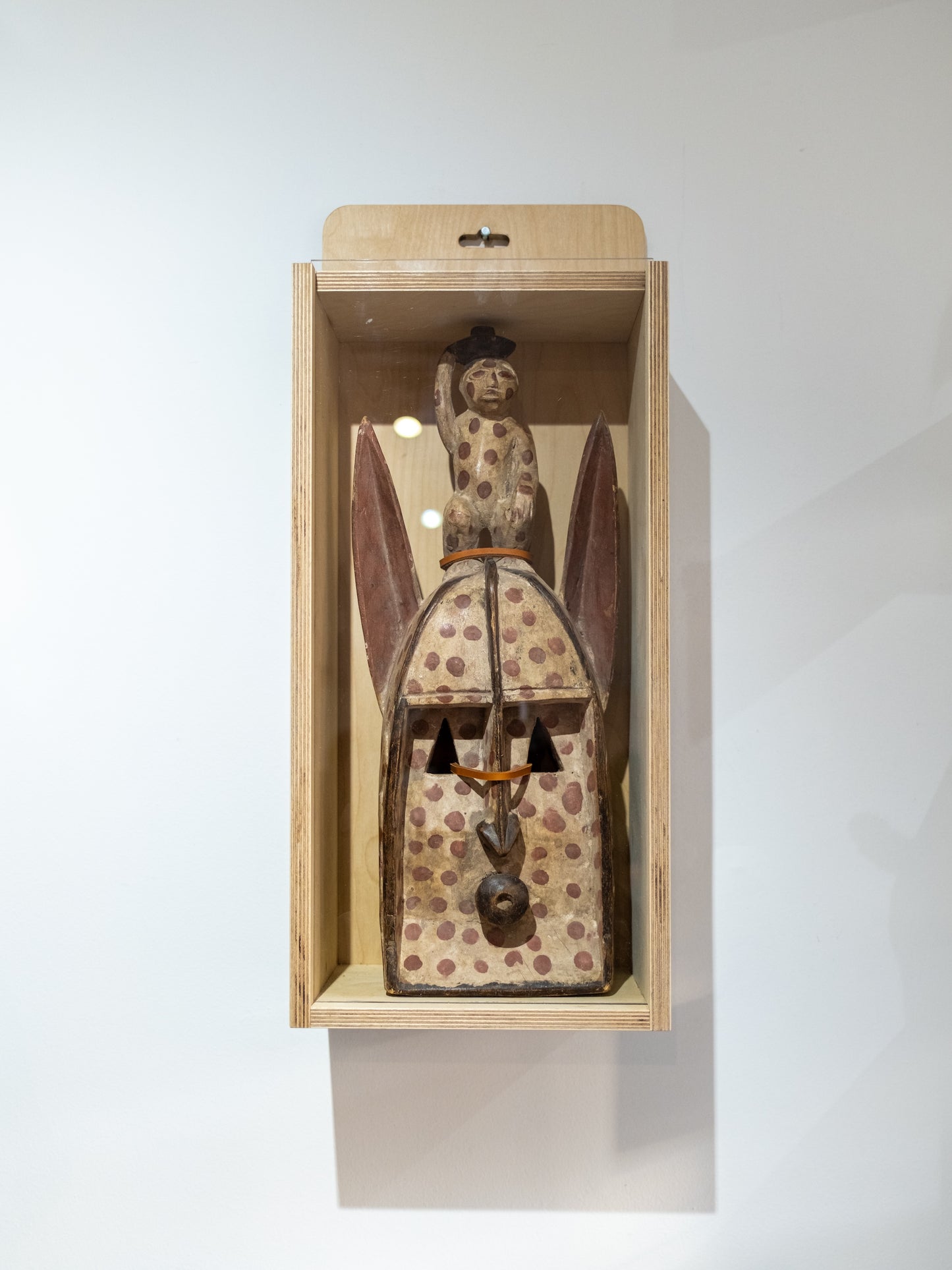
Chad Petersen (b.1982)
Material
Leather on Plywood
Dimensions
44.5cm x 89.5cm
Fabric Properties
Fabric Properties
VEGETABLE TANNED LEATHER
Vegetable tanned leather is produced using tannins extracted from tree bark, leaves, and other plant matter, rather than the chromium salts used in conventional "chrome tanning." The process is slower and more traditional, but it produces a material prized for its durability and the way it ages.
- Firm when new, softer with use. Vegetable tanned leather typically feels stiffer and more structured straight out of production compared to chrome-tanned leather. It breaks in and softens the more it's handled or worn.
- Develops a patina. This is its signature trait with light, use, and time, the surface color shifts and deepens (or lightens, depending on the starting shade), building a unique character that's often considered a mark of quality rather than wear.
- Natural, minimally processed finish. The surface isn't heavily coated, so the leather shows more of its natural grain and texture.
PLYWOOD
Plywood is an engineered wood product made by gluing together thin layers of wood veneer, with the grain direction of each layer rotated (typically 90°) relative to the one beneath it. This cross-layering is what gives plywood its structural advantages over solid wood.
- Dimensional stability. The alternating grain direction cancels out the natural tendency of wood to expand, contract, or warp along the grain, making plywood far more stable than solid lumber.
- High strength-to-weight ratio. It resists splitting and cracking while remaining relatively lightweight.
- Uniform strength. Because layers run in different directions, plywood has more consistent strength across both directions of a panel, unlike solid wood, which is much stronger along the grain than across it.
- Moderate insulation and sound damping. It provides some thermal insulation and can dampen sound, useful in furniture, partitions, and paneling.
Size Conversion Chart
Size Conversion Chart

General Care Guide
General Care Guide
- TECHNICAL FABRIC (Polyamide) | Technical garments can be machine washed to a maximum of 30°C. We recommend a cold wash with a short spin, or drip dry. You can also gently hand wash your item; rinse thoroughly and then drip dry on the washing line.
- COTTON POPLIN | Wash at 30°C using non-bio liquid, and wash the fabric before use as it is likely to shrink. Iron using the appropriate setting for cotton on your iron. Dry naturally or tumble dry on a low setting.
- COTTON LINEN BLEND | Cold wash using non-bio liquid, and wash the fabric before use as it is likely to shrink. Iron using the appropriate setting for cotton on your iron. Dry naturally or tumble dry on a low setting.
- COTTON SINGLE KNIT JERSEY (T-SHIRTS) | Single jersey knit / brushed fleece can be hand washed or machine washed at 30°C. Hand washing is always the best and safest method for jersey. For machine washing, turn the item inside out and place it in a mesh washing bag. Lay the item flat in its natural shape on a drying rack, hang to dry, or tumble dry on a low setting.
- 100% SILK AND SILK BLEND | Dry clean only is recommended, as silk has a tendency to shrink and become hard. Iron using the appropriate setting for silk on your iron. Dry naturally. No tumble drying.
- SOFT SATIN | Cold wash or dry clean (recommended) using non-bio liquid, and wash the fabric before use. Iron using the appropriate setting for silk on your iron. Dry naturally. No tumble drying.
- LEATHER | Can be polished with a neutral leather cream or wax to maintain the colour and prevent it from drying out.
- WOOL AND WOOL BLEND | Cold wash only. Turn wool clothes inside out and wash on the delicate cycle (or the wool or hand wash cycle, if your washer has these settings). Use cold water and a mild liquid detergent, and add an extra rinse to the wash cycle. To avoid shrinking, don't put wool clothing in the dryer. No tumble drying and no warm water.
- COTTON TWILL | For best care, we recommend a cold gentle machine wash with like colours at 40°C using a quality laundry liquid or powder. Wash inside out to protect the print. Do not soak, wring, rub, bleach or tumble dry. Dry flat or on a hanger. Warm iron on the reverse side.